Your personal JSON storage API
Store, manage, and serve JSON data with a simple REST API. Create stores, issue API keys, and track usage — all in one place.
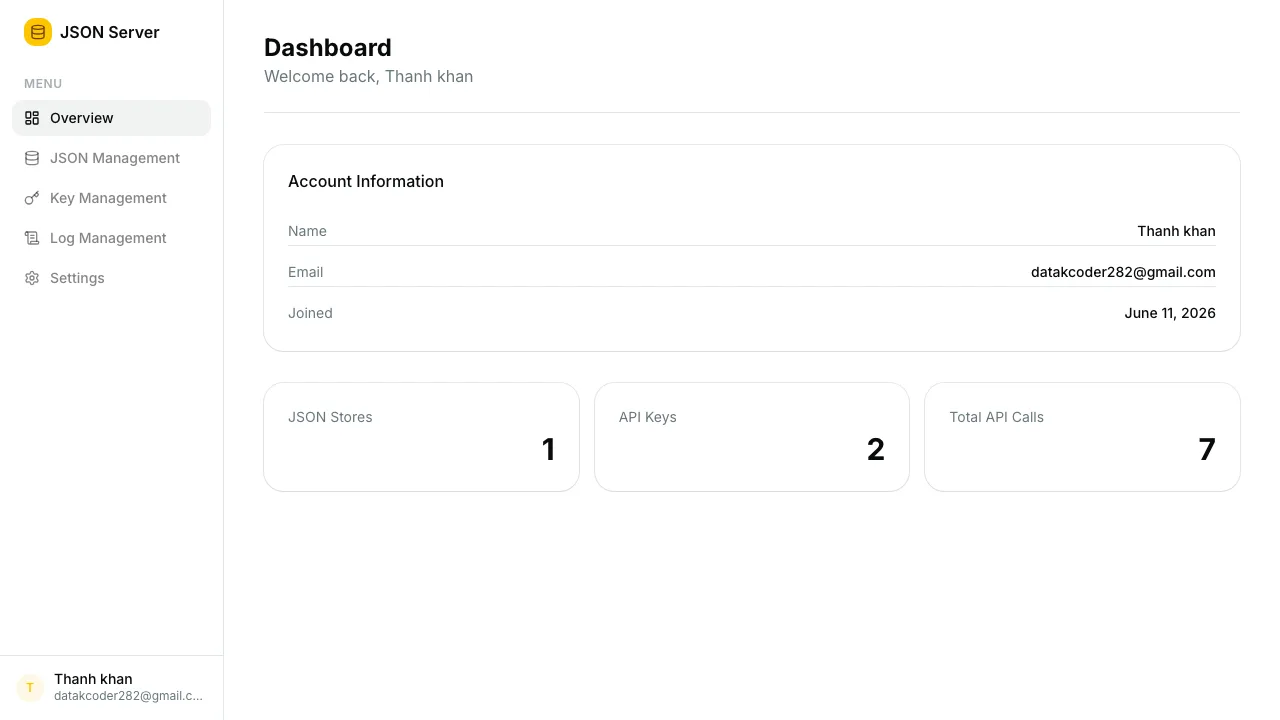
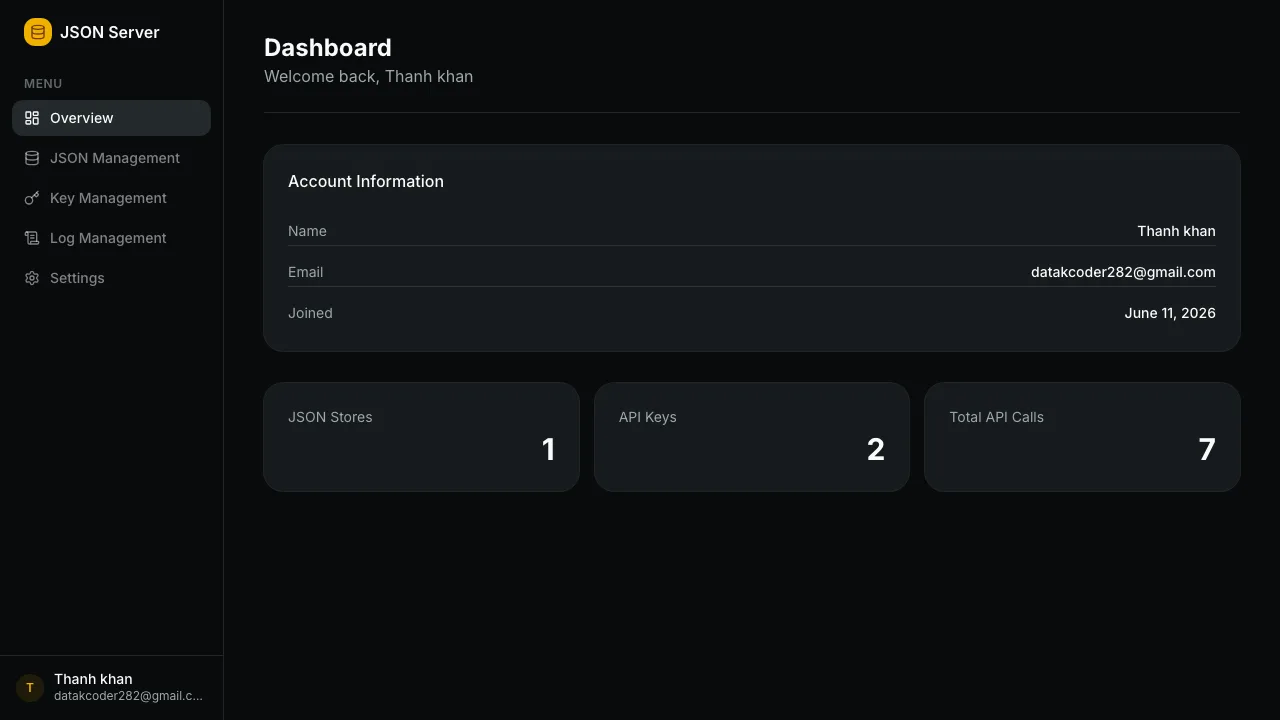
Tour
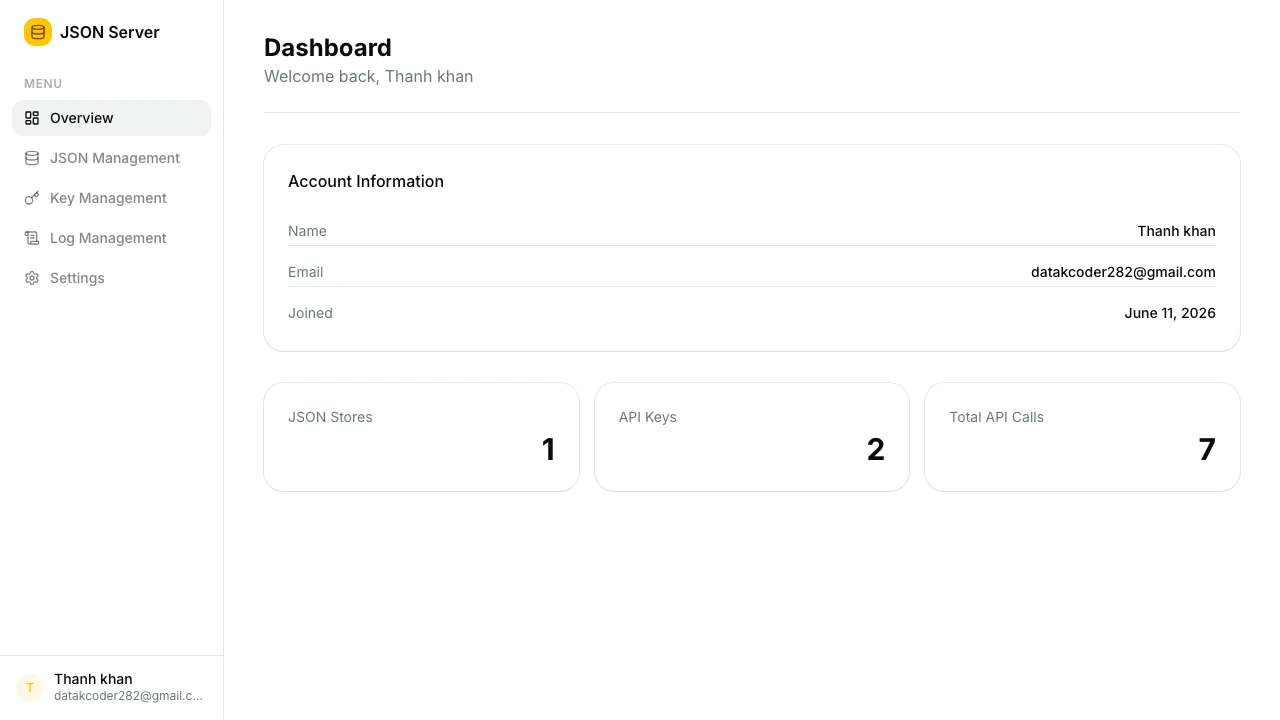
See it in action
Browse every section of the dashboard.
Features
Everything you need to manage JSON data
A complete toolkit for storing, securing, and serving JSON data via REST.
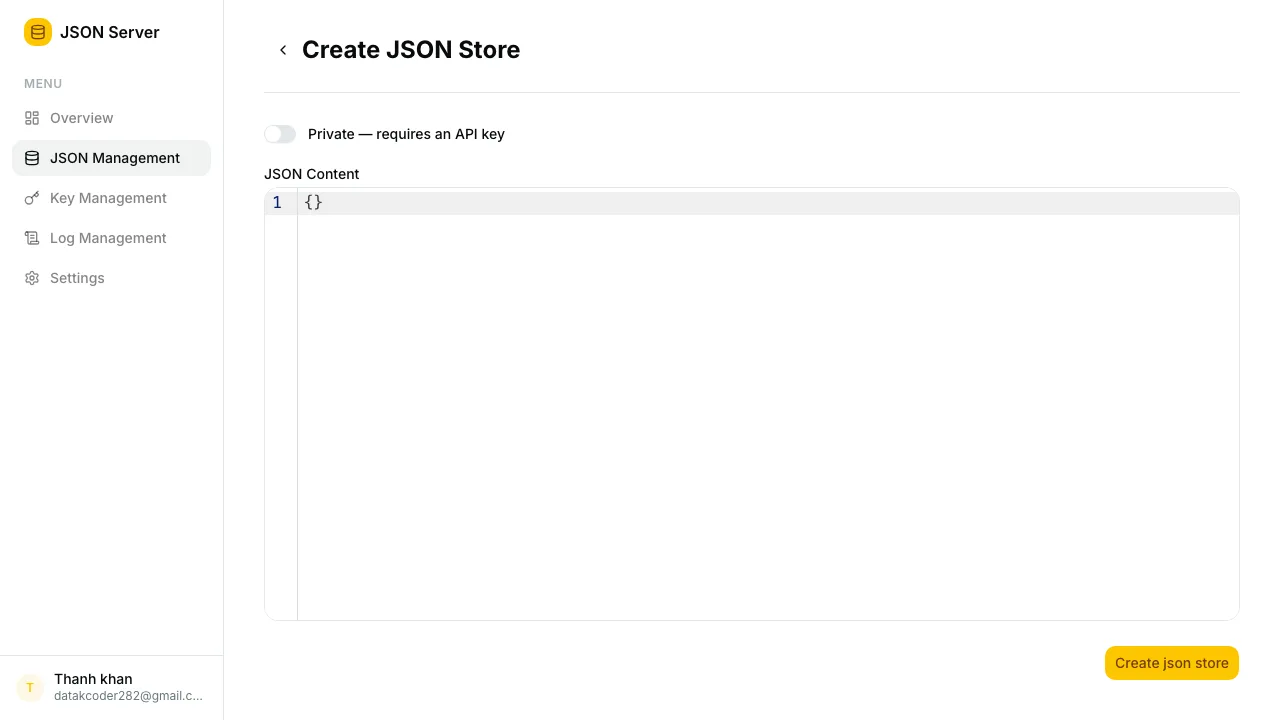
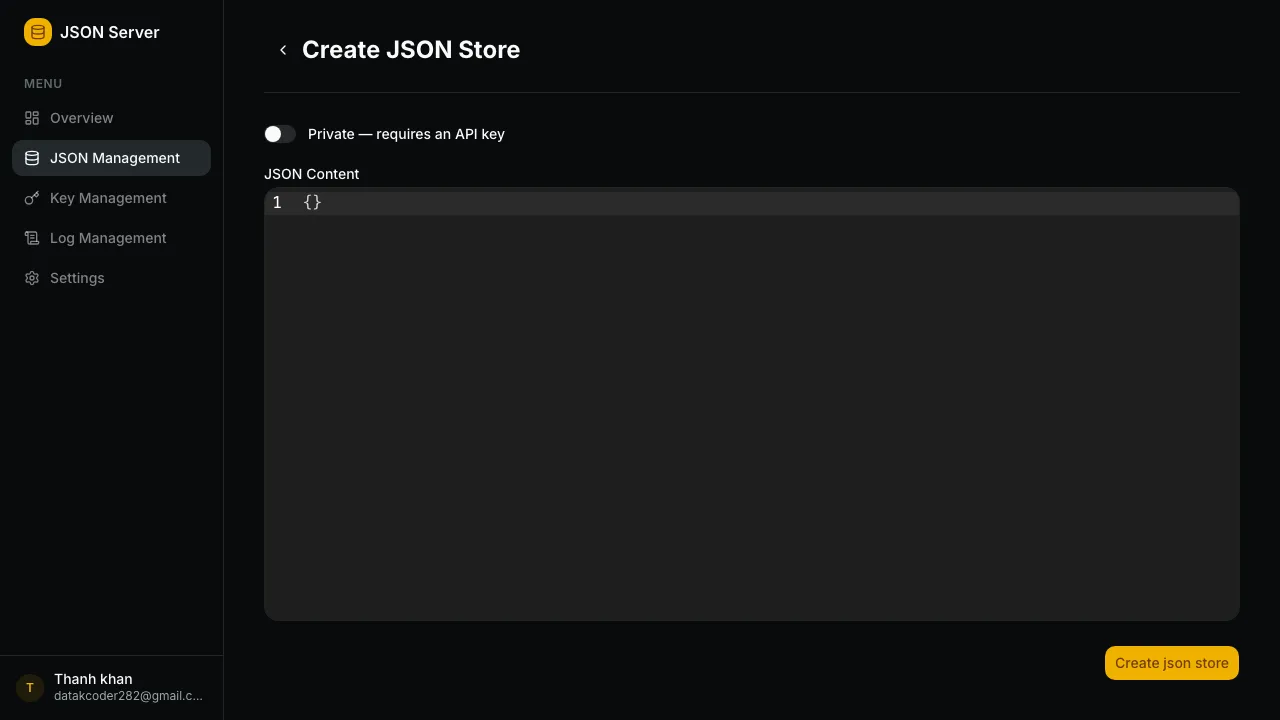
JSON Stores
Create and manage JSON data stores with a built-in code editor. Toggle public or private visibility per store.
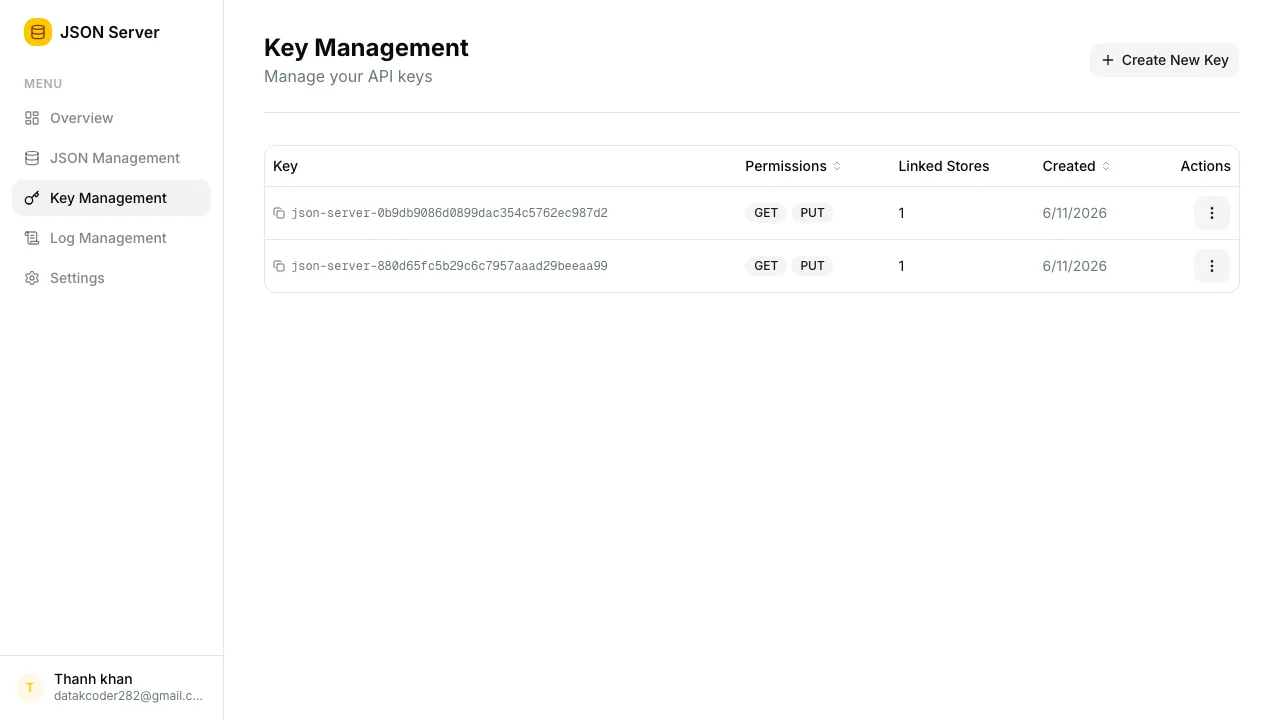
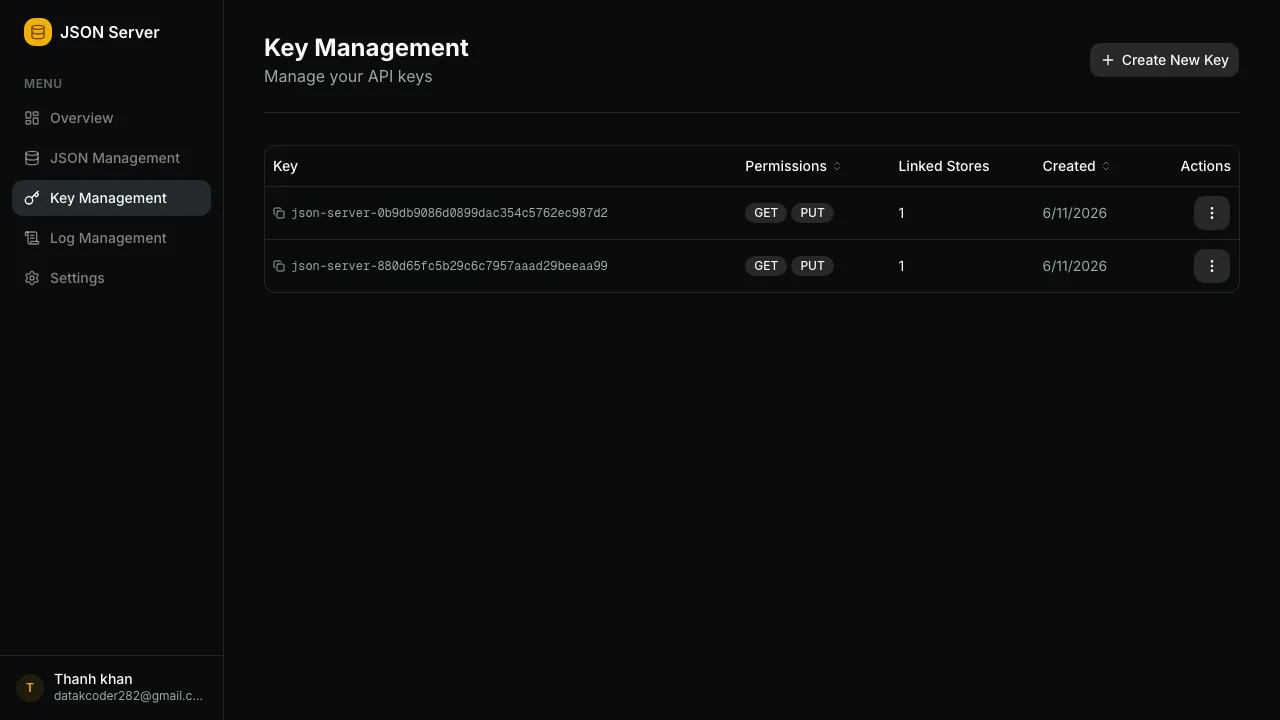
API Keys
Issue scoped API keys with granular GET/PUT permissions, linked to specific JSON stores.
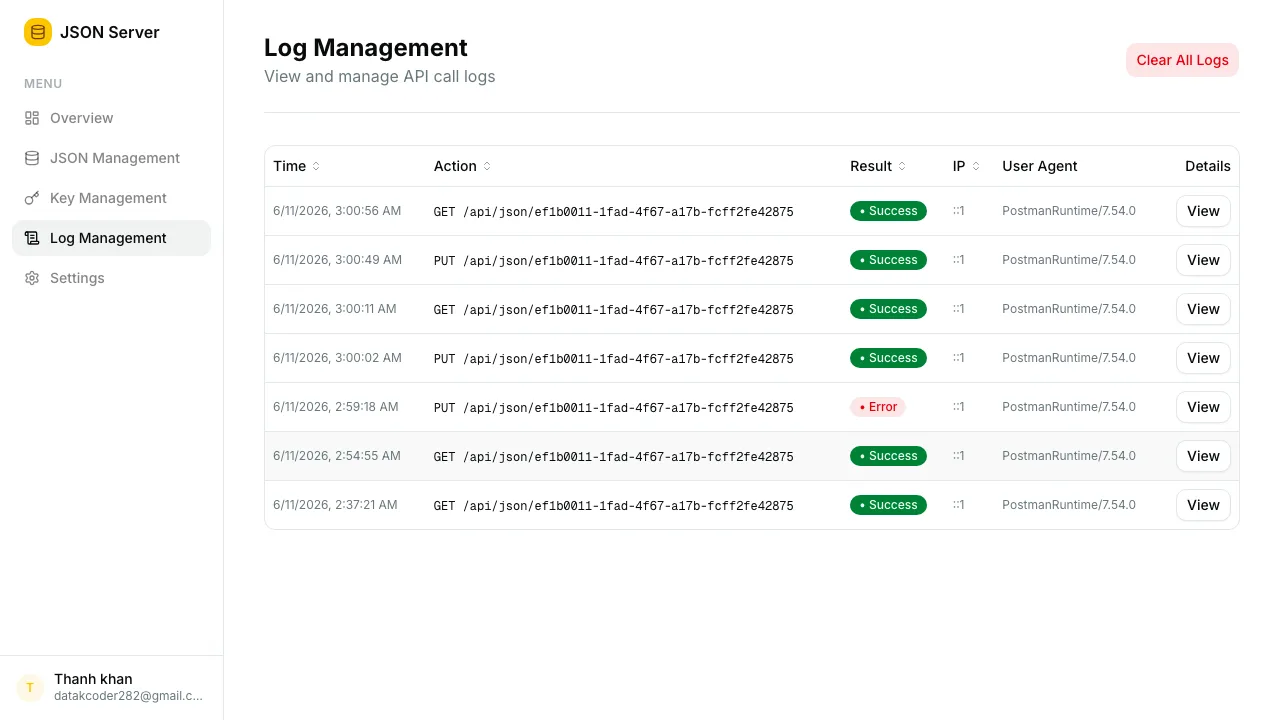
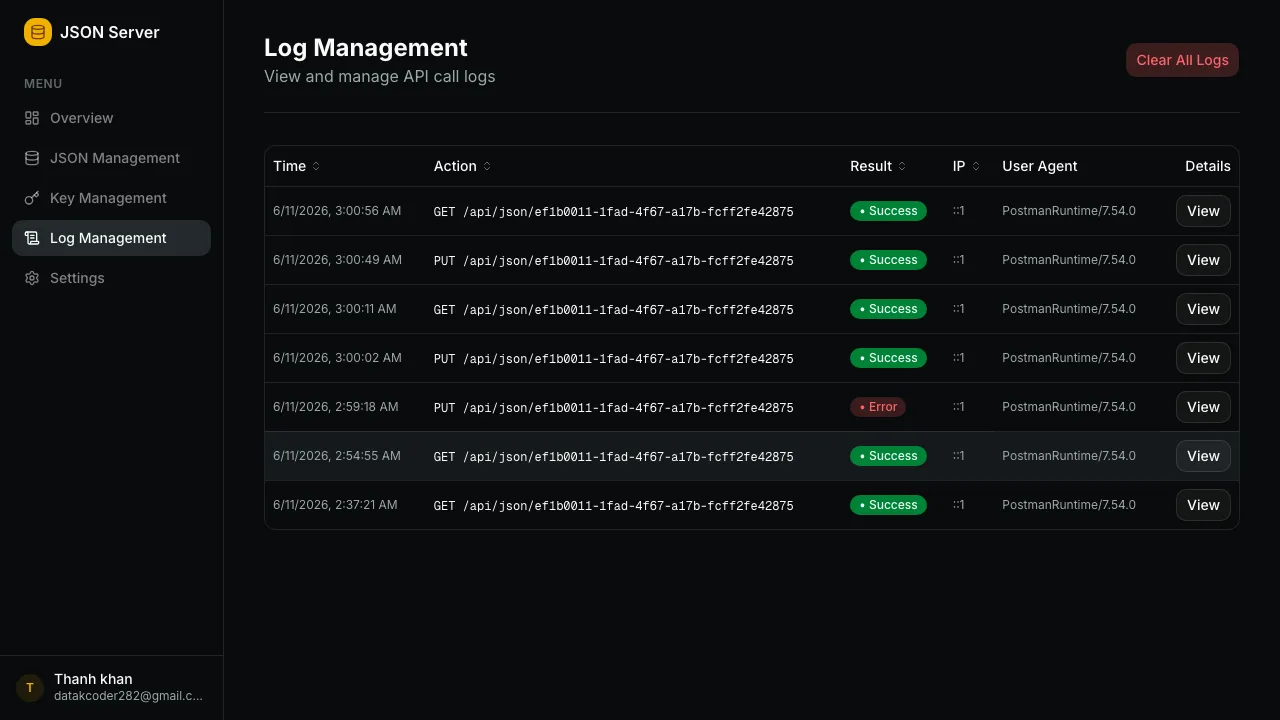
Access Logs
Track every API call with detailed logs — IP, user agent, request and response bodies.
How it works
From store to API in 3 steps
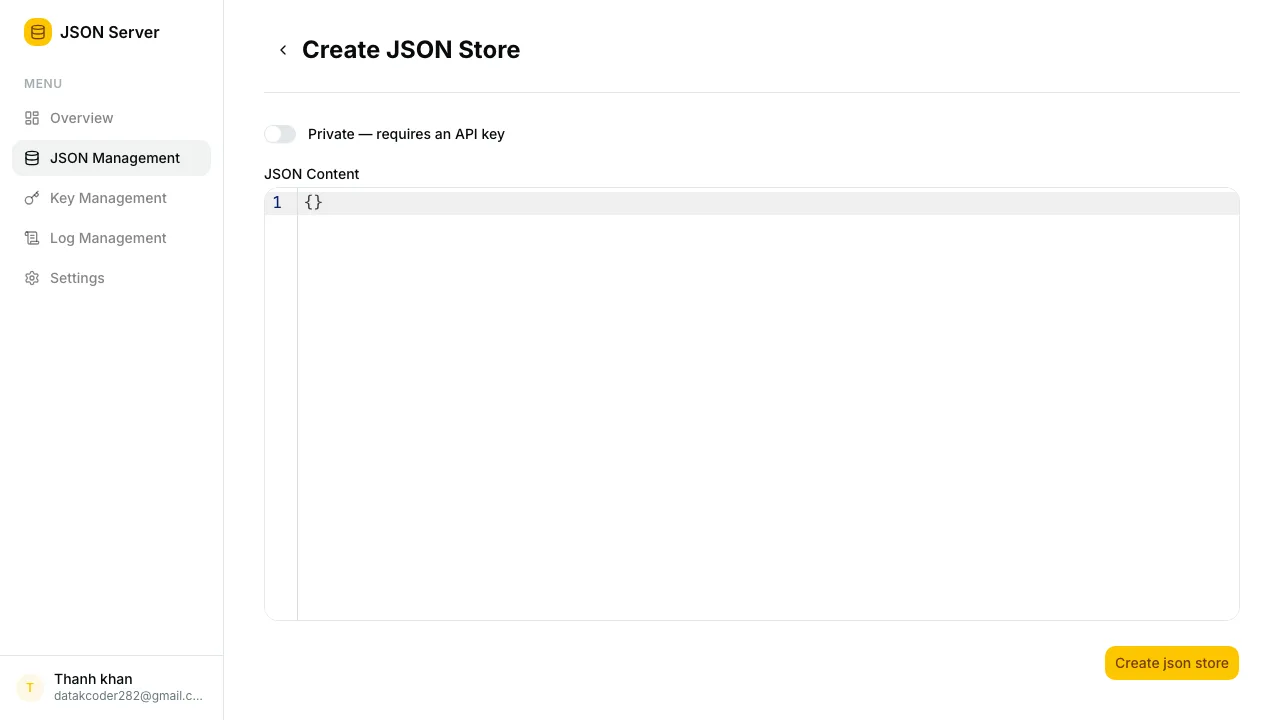
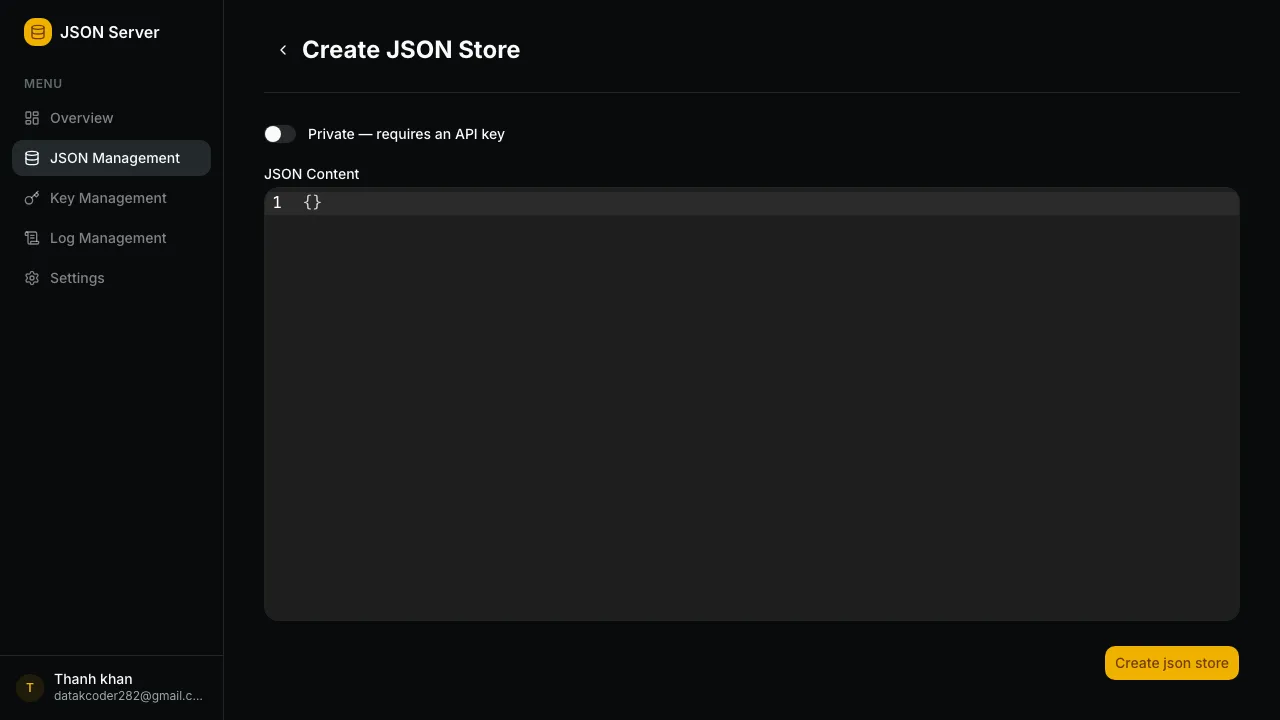
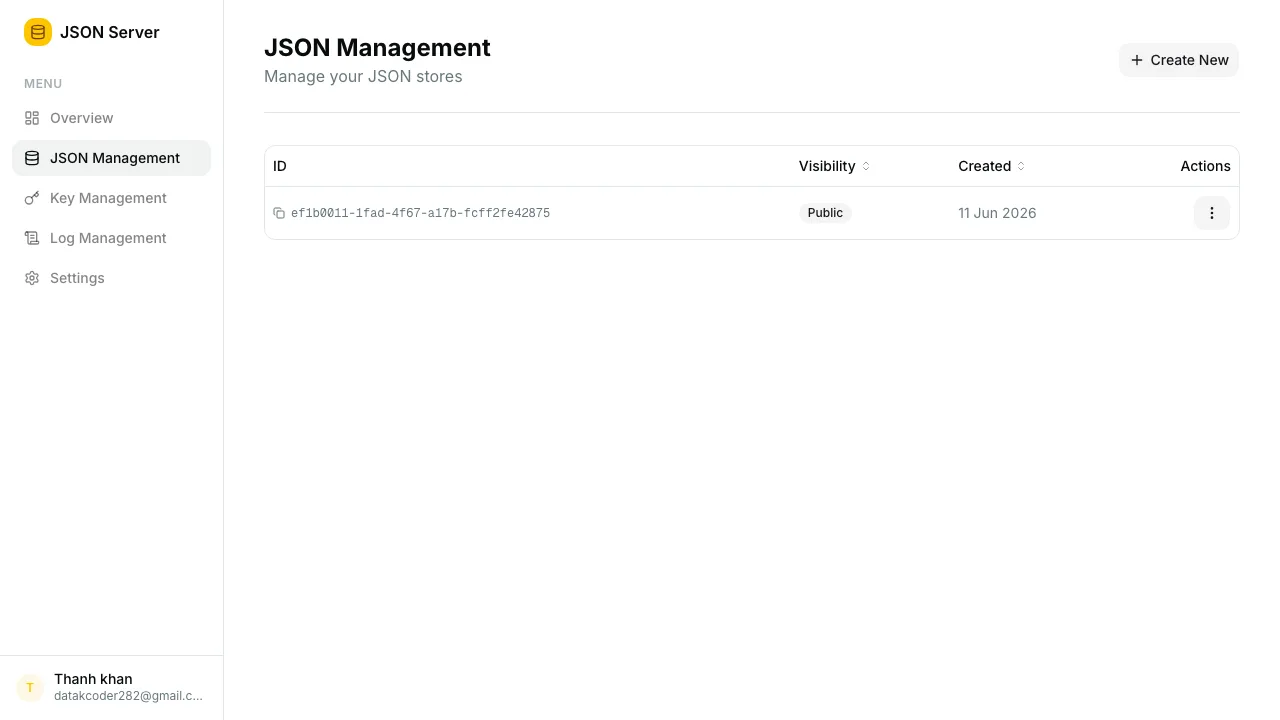
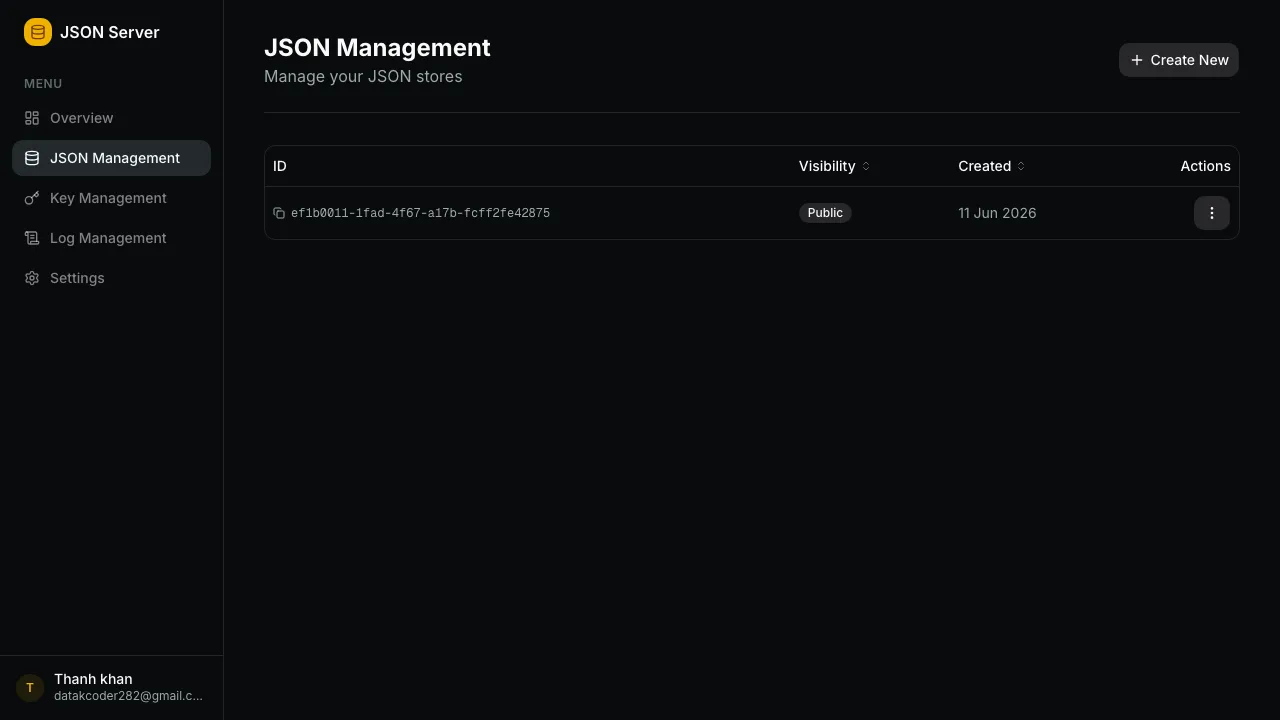
Create a JSON Store
Use the built-in code editor to define your JSON structure. Toggle public or private visibility.
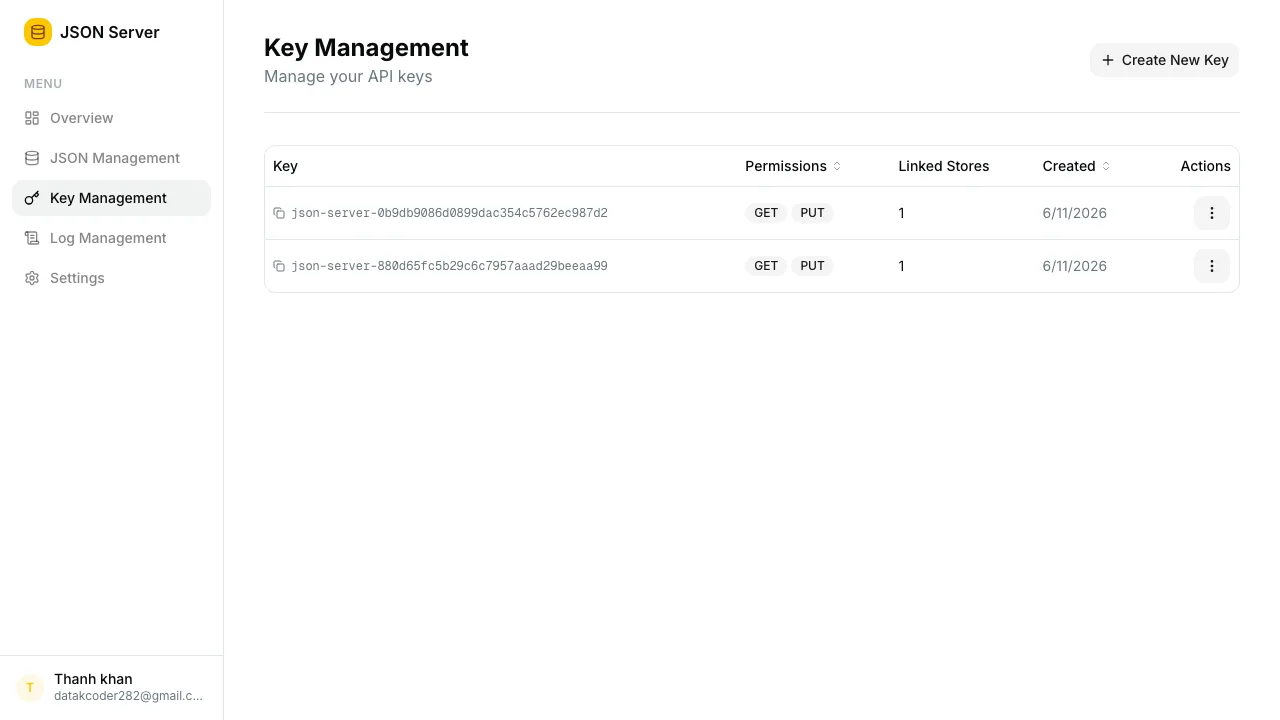
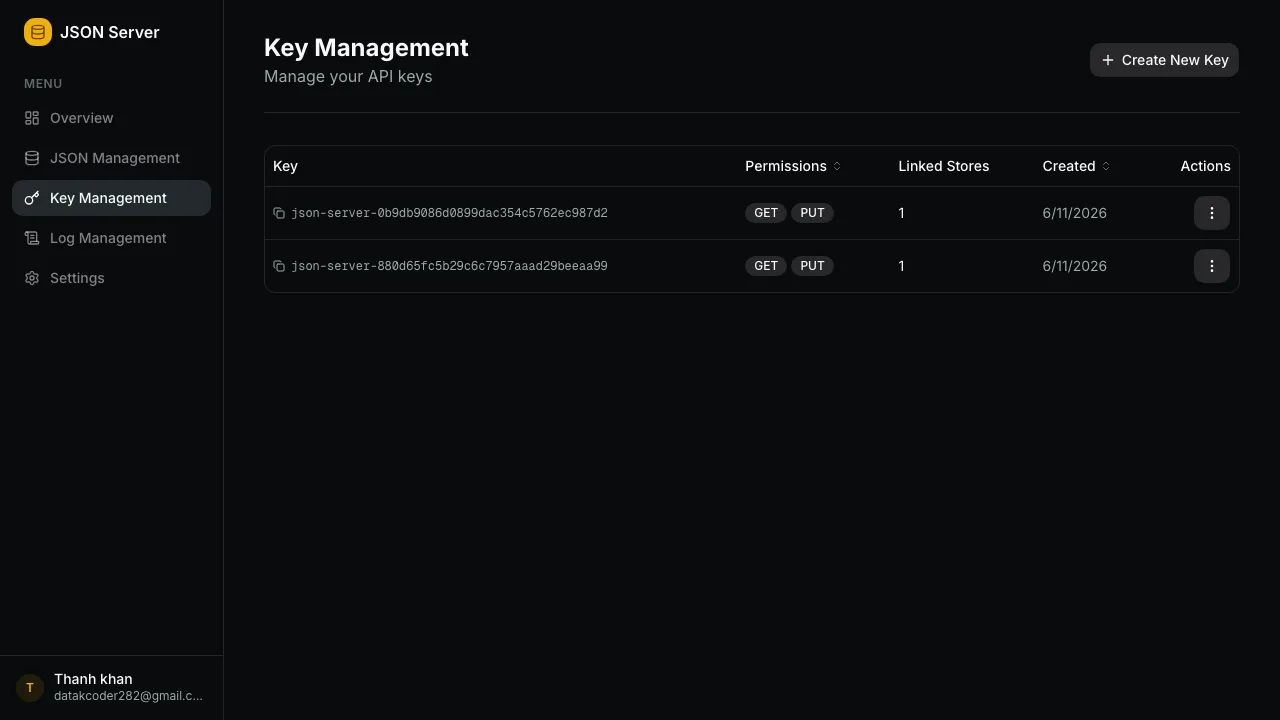
Generate an API Key
Issue a scoped key with GET or PUT permissions and link it to the stores you want to expose.
Integrate anywhere
Call GET /api/json/{id} from any app. Use PUT to deep-merge updates into your store.
Ready to get started?
Free to use. No credit card required. Set up your first JSON store in minutes.
Built for learning
JSON Server is a hands-on project designed to demonstrate the architecture of a modern, production-grade full-stack web application — from authentication and data modeling to API design and access control.
REST API Design
Learn how to structure a clean REST API with proper HTTP methods, status codes, and JSON response formats. Practice GET and PUT endpoints with deep-merge logic.
Authentication Flows
Explore a complete auth system — user registration, email verification via Resend, credential login with NextAuth v5, and session-protected routes using middleware.
Access Control
Understand API key management: generating scoped keys, linking them to specific resources, and enforcing GET/PUT permissions per request at the API layer.
Database & ORM
Practice schema design with Drizzle ORM and MySQL — relationships, migrations, and efficient queries using a type-safe ORM in a TypeScript codebase.
Server Components
Discover Next.js 15 App Router patterns: Server Components for data fetching, Server Actions for mutations, and how to mix server and client rendering efficiently.
Audit & Observability
See how every API call can be logged with metadata — IP, user agent, request/response body — and how to build a filterable, paginated log viewer on top of that data.
Tech stack